
Where Do Christmas Traditions Come From? A History That Might Surprise You
From ancient Rome to the Roanoke Star — the real origins of the holiday season
Originally written by Kimberly Emory for Roanoke Family's Growing Up in the Valley magazine, December 2023. Updated May 2026.
Most of what we do at Christmas is older than Christianity. The trees, the candles, the greenery, the feasting, the gift-giving — these traditions stretch back thousands of years through cultures that had never heard of Bethlehem. Understanding where they came from doesn't diminish the season. It makes it richer.
Here's what's actually behind the things we do every December.
Greenery: Holly, Mistletoe, and the Poinsettia
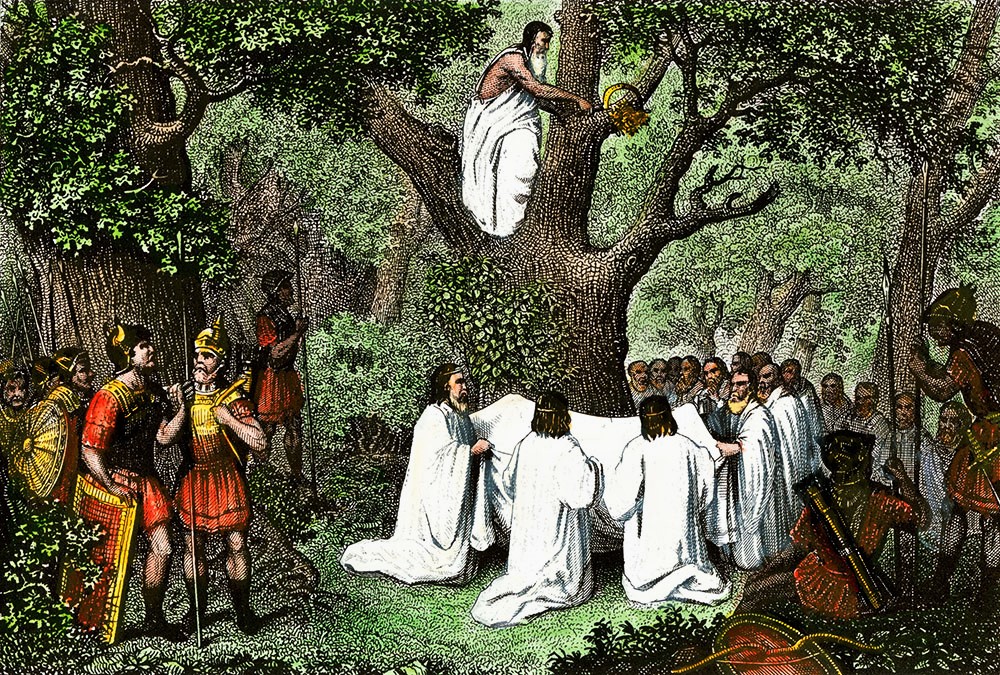
The Romans and Scandinavians both decorated with evergreens during their winter festivals. Both cultures saw the plants that stayed green through winter as uniquely honorable — signs of life persisting in the cold. Celtic Druids believed mistletoe was magical, a bringer of love and good luck, and wore holly in their hair during winter celebrations.
When Christianity spread through Europe, these traditions didn't disappear — they merged. Holly appeared in early American churches. During the restoration of Colonial Williamsburg, women began creating Christmas wreaths from fruit, nuts, and evergreens — a look so popular that families across the country tried to replicate it, even though it wasn't historically accurate to early American celebrations.
The poinsettia has its own story. In 1828, Dr. Joel Roberts Poinsett, the first U.S. Ambassador to Mexico, brought the plant back from his travels. It was renamed for him. A Mexican legend holds that a girl who had nothing to give to the Christ child was told by an angel to gather roadside weeds and take them to the manger. When she laid them down, they bloomed into the striking red flowers we know today.
The Christmas Tree
Trees came first from Rome, where Saturnalia worshippers decorated evergreens with candles and figures of their god Saturn. The Druids decorated trees with candles and golden fruits to symbolize the sun during the winter solstice.
In medieval Europe, plays about Adam and Eve toured through the continent during the Christmas season. The set piece for these plays was called a paradise tree, often decorated with red fruits like apples. Over time, the tree became associated with Christmas itself.
Martin Luther is commonly credited with the German tradition of decorating Christmas trees with cookies and candles — though historians debate the specifics. What is well-documented is that German professor Charles Minnigerode brought the Christmas tree to America in 1842, when he was teaching at William & Mary and staying with an American family. Early American trees were decorated with paper chains, candles, popcorn garlands, cranberry strings, and cornhusk figures.
Lights and Candles
All of the ancient winter festivals were fundamentally about light. The winter solstice — the shortest day of the year — was a moment to honor the sun and encourage its return. Candles were central.
After the arrival of Christianity, as Jesus declared himself the "light of the world," candles continued in the Christmas season with new meaning. In the Middle Ages, candles placed in windows symbolized welcome — a light for the Christ child searching for lodging.
Candles on Christmas trees were a real fire hazard (and caused numerous fires), which is why they were replaced with electric lights as soon as the technology became available. The Norsemen burned a Yule log on December 21st — the darkest day of the year — to encourage the return of light and warmth. The Yule log now lives on most often as a rolled ice cream or cake dessert.
Food and Feasting
Every ancient winter festival was also a feast. Wild boar was common at winter celebrations throughout northern Europe — the ancestor of the Christmas ham. Pie and plum pudding were popular in medieval England during the Christmas season.
In colonial America, Christmas was primarily an adult celebration of the harvest's end — the twelve days of Christmas were twelve days of dancing, feasting, and fox hunting, culminating in 12th Night Cake on Epiphany.
The family-centered Christmas most of us know didn't emerge until the 1800s, when Charles Dickens' A Christmas Carol and the publication of the poem "A Visit from St. Nicholas" shifted the holiday toward children, gifts, and generosity.
Santa Claus: The Real Person Behind the Legend
Saint Nicholas was a real man — a third-century Greek bishop, orphaned young, who gave away his inheritance and became known throughout his lifetime for extraordinary generosity. One of the most enduring stories involves him throwing bags of gold coins through the windows of young women who couldn't afford their dowries. Some versions say the money landed in their shoes by the hearth — which is why Scandinavians leave their shoes out on Christmas Eve. Others say it landed in stockings hanging to dry — which is why the British and Americans hang stockings from the mantle.
By the Middle Ages, Saint Nicholas had become the patron credited with any unexpected gift. His legend traveled through Europe for centuries, and in 1823 the poem "A Visit from St. Nicholas" gave him his modern form: a jolly, chimney-climbing, gift-delivering figure whose round belly and red suit had been shaped by centuries of folk tradition across multiple cultures.
From there, the Santa Claus we know today was born.
The Roanoke Star: Our Own Holiday Artifact
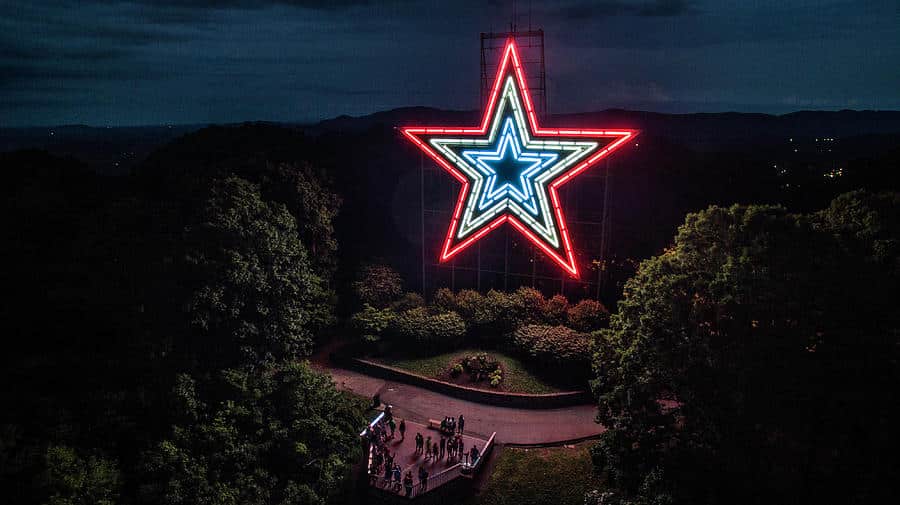
Our valley has a uniquely local piece of Christmas history. The Roanoke Star on Mill Mountain was commissioned by the Roanoke Merchants Association and first lit on November 23, 1949 — intended to shine during the holiday shopping season and then be dismantled.
It was so popular that it stayed.
Over the decades, the star has become one of the most recognized symbols of the Roanoke Valley — lit in red, white, and blue for six years following September 11, dimmed to red to mark traffic fatalities, and darkened completely on the first anniversary of the Virginia Tech shootings. It has carried the weight of grief and patriotism and celebration.
But its origins are squarely in the Christmas season. The next time you see it from across the valley, you're looking at a 75-year-old holiday tradition that was supposed to last a few weeks.
Why Any of This Matters
Traditions are how we connect the present to the past, and how we pass something forward to the future. The tree you put up, the candles you light, the stockings you hang — these gestures link your family to thousands of years of human beings doing the same things, in different languages and different climates, all trying to hold light through the darkest part of the year.
That's worth knowing about.
About The Author
Originally written by Kimberly Emory for Roanoke Family's Growing Up in the Valley magazine, December 2023. Updated May 2026.
