
Lunchbox Rut in the Roanoke Valley? A Virginia Tech Dietitian Shares Affordable, Less-Processed School Lunch Ideas
Brenda Davy, PhD, RDN, of Virginia Tech’s Department of Human Nutrition, Foods, and Exercise answered our questions about packing healthier lunches for Roanoke, Salem, and Botetourt kids without spending more
Words by Jennifer Bryerton
It’s mid-October in the Roanoke Valley, and the lunchbox has officially hit its slump. Same turkey sandwich. Same applesauce cup. Same half-eaten something coming home in the bottom of the backpack. So we went to an expert just down I-81 in Blacksburg, about 45 minutes from downtown Roanoke, and asked for help.
Brenda M. Davy, PhD, RDN, is a registered dietitian nutritionist and a professor in Virginia Tech’s Department of Human Nutrition, Foods, and Exercise, where she works in the Laboratory for Eating Behaviors and Weight Management. She answered four questions for RoanokeFamily readers about packing lunches that are cheaper, less processed, and a little less boring, whether your kids go to school in Roanoke City, Roanoke County, Salem, Vinton, or out in Botetourt County.
Why this matters more than it seems
Here’s the number that stopped us. Davy told Virginia Tech News that ultra-processed foods make up 60% or more of the calories school-age kids eat. That’s not a scold. It’s a reality check for those of us who grab whatever’s fastest on a weeknight.
There’s a longer game too. As kids get older they make more of their own food choices, and Davy sees the packed lunch as one of the few chances parents get to shape healthy habits outside the house. You can read her full tips in Virginia Tech’s original article on packing affordable school lunches, and for pediatricians, wellness, and the rest of the health basics, our Family Health in the Roanoke Valley guide is a good place to bookmark.
Start with a few cheap, nutritious staples
When we asked what to build a week of lunches around on a tight budget, Dr. Davy kept it refreshingly simple.
“Store-brand ‘natural’ peanut butter is one nutritious and affordable option, as well as in-season local fruits, for example, apples in the fall, and store-brand yogurts,” she told us. “These are all convenient, healthy and nutritious options for school lunches.”
That apple tip lands right on time. If you’re planning a fall outing anyway, our guide to where to pick apples near Roanoke rounds up orchards within about two hours of the City Market, starting with Johnson’s Orchard in Bedford, roughly 40 minutes away. This year’s spring freeze hit some Virginia orchards, so call ahead before you load the car. A full bag from one trip can carry a lot of lunches.
One quick note on peanut butter: plenty of schools and classrooms are nut-free, so check your school’s policy before you pack it. Sunflower seed butter is the usual stand-in.
How to spot an ultra-processed food in about five seconds
This was the answer we found most useful, because it doesn’t take a nutrition degree or an app in the middle of the grocery aisle.
“The easiest way to determine if an item is an ultra-processed food (UPF) or not is to look at its ingredient list, if it is a packaged food,” Dr. Davy said. “If the food contains ingredients that you would not recognize as something you’d have in your home kitchen, for example ingredients that sound like a chemical additive, then it is likely a UPF.”
She used peanut butter as the example. A jar that lists only peanuts and salt isn’t ultra-processed. A jar that lists peanuts, salt, hydrogenated vegetable oil, and mono- and diglycerides is. “Choosing a natural-type peanut butter [over] common commercial brands of regular peanut butter is an easy swap,” she said.
A practical heads-up: natural peanut butter separates, with the oil sitting on top. Stir it well once, then keep it in the fridge so it stays spreadable.
Adding variety without adding cost or time
By October, and definitely by January, a lot of kids are just done with the same rotation. Dr. Davy’s fix isn’t new recipes. It’s small switches inside things you already buy.
Her suggestion is to “try [a] new type of the item usually purchased, for example buying a cheddar cheese stick instead of a mozzarella cheese stick, or a new flavor of a shelf-stable fruit such as a mango fruit squeeze rather than an applesauce cup.”
Same grocery trip, one different item in the cart, zero extra prep. One caution from her original Virginia Tech tips: check labels on applesauce and fruit purees for added sugars, so give those squeeze pouches a quick look before you stock up.
If the grocery budget is the real pressure point this fall, our Kids Eat Free Roanoke guide sorts valley restaurant deals by day of the week, which can free up a little room for lunchbox staples.
Let the kids pack it
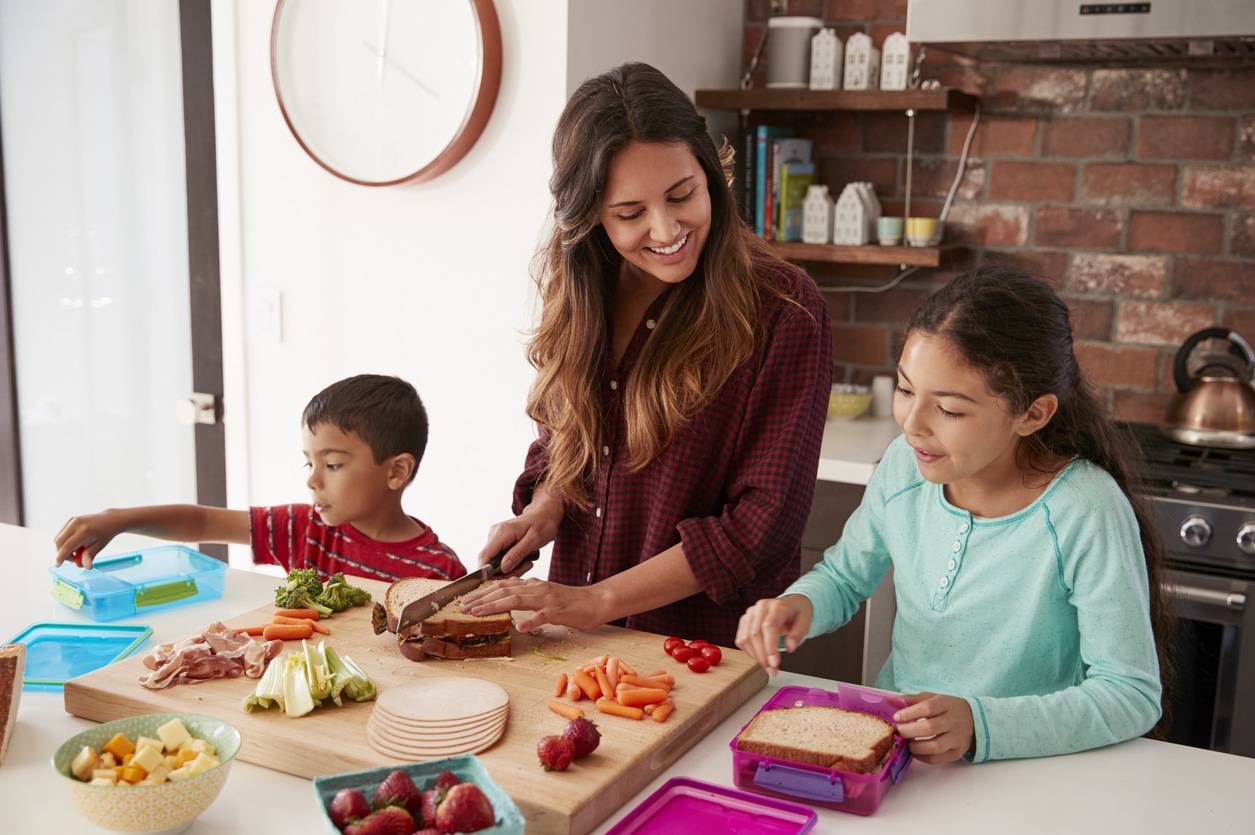
Dr. Davy’s last answer has the longest payoff. Getting kids involved now means fewer lunchbox battles later and, eventually, a teenager who can feed themselves.
“Kids may enjoy being involved with grocery shopping to select items for their lunches,” she said, “or learning how to make simple recipes that they can bring for lunch, for example homemade trail mixes, hummus, or snack bars.”
A trail mix bar is an easy start. Set out a few bins on a Sunday, say raisins, a little cereal, sunflower seeds or nuts if your school allows them, and some dark chocolate chips, and let each kid scoop their own week’s worth into small containers. Little ones love the scooping. Older kids like being in charge of the combinations. For everything else on the school side of family life, from division calendars to preschool options, see our Roanoke Valley schools and education guide.
Quick answers for busy Roanoke parents
Virginia Tech dietitian Dr. Brenda Davy recommends store-brand natural peanut butter, store-brand yogurt, and in-season local fruit, like apples in the fall.
Check the ingredient list. If it includes things you wouldn't keep in your home kitchen, especially ingredients that sound like chemical additives, it's likely ultra-processed.
Choose a natural peanut butter made with just peanuts, or peanuts and salt, instead of brands with added oils and emulsifiers.
Swap in a different version of a food your child already likes, such as a cheddar stick instead of mozzarella, or a new fruit squeeze flavor.
Even young kids can help pick items at the grocery store or scoop their own trail mix. Older kids can learn simple recipes like hummus or homemade snack bars.
We’d love to hear what’s working in your house. What’s the one lunch your kids never trade away?
About the Author